
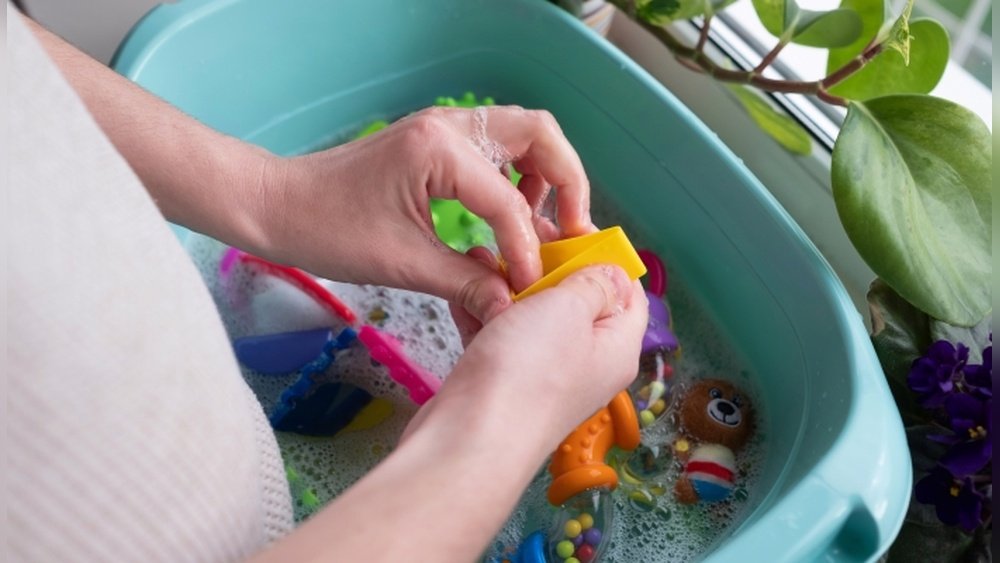
Most parents don’t realize the importance of cleaning your baby’s bath toys. Bath toys are wet every day, a prime breeding ground for mold, bacteria and soap scum. In 2018, a Swiss study found that 80% of tested bath toys contained harmful bacteria internally. Dirty toys that your baby puts in their mouth can cause belly upsets and skin rashes. Fortunately, cleaning bath toys is easy if you know what works—and what not to. Here you’ll learn how to clean baby bath toys properly, make sure they are safe and help make your routine easier.
Why Do Toys Get Dirty In The Bath
Bath toys are typically made of rubber, plastic or vinyl. They are porous so water, soap and shampoo can get into them. Moisture can develop over time, creating a breeding ground for germs. Mold can grow as black spots and bacteria can cause toys to smell bad. It’s even riskier if your child bites or chews on toys.
Here’s a quick comparison of how different materials attract germs:
| Material. | How quickly it gets dirty | Common problems |
|---|---|---|
| Rubber | Real simple | Mold & Bacteria |
| Plastics | Mild. | Soap scum. mold. |
| Vinyl | Simple | Smells, mold |
How To Clean Bath Toys For Babies
Bath toys are easy to clean but the key is to do it regularly. Its easy to keep bath toys safe, just follow these simple steps.
1. Collect Your Materials
You will need:
- Hot water
- Mild dish soap.
- Vinegar, white
- Clean sponge or paintbrush.
- A basin or tub
2. Clean Toys After Each Bath
Rinse toys with clean water after every bath. Blot them as dry as you can. This simple habit stops mold from starting.
3. Weekly Deep Clean
Deep cleaning weekly:
- Fill a basin with warm water and put in 2 tablespoons of dish soap.
- Soak the toys for 15 minutes.
- Use a sponge or brush to scrub all surfaces, particularly in crevices.
- Rinse in fresh water.
Squeeze the toys underwater with holes and then squeeze soapy water out. Repeat a few times.
4. Kill Mold And Bacteria
If you see black spots or smell a musty odor, your toys need extra cleaning. For this use white vinegar:
- A basin is filled with equal parts vinegar and water.
- Let toys soak for 30 minutes.
- Wash well and scrub.
Vinegar kills most mold and bacteria without harsh chemicals. If the toys are still dirty, repeat the process or throw them away.
5. Soak to Dry
Always let bath toys dry out completely. Put them on a towel in a sunny place or hang them in a mesh bag. Germs die in sunlight. Avoid keeping toys in moist bathrooms.
A simple comparison of methods of drying
| Method of drying | Effectiveness | Time Required |
|---|---|---|
| On towel. | Good, | 4-6 hrs |
| Mesh sack | Great | 2-4h |
| direct sun light | Regards | 1-3 hrs |

Additional Tips for a Clean Bath Toy
Some tips are not obvious but very helpful:
- Seal toy holes: Many toys have holes that allow water in. Seal the hole with a little hot glue before the first use. It keeps the water out and keeps the mold out.
- Rotate toys. Use only a few at a time. Then clean and dry the rest of it. This minimizes the risk of bacteria build-up.
- Use dishwasher-safe toys: Some bath toys are safe for the dishwasher. Check labels and wash on top rack once a week.
Common Pitfalls To Avoid
Many parents do mistakes that make toys get dirty faster:
- Leaving toys wet Never leave toys floating in bath water after use.
- Smell: If a toy smells musty, wash it immediately or replace it.
- Using harsh chemicals: Don’t use bleach or other strong cleaners. They may leave harmful residues.
- Stored in damp places Bathrooms are often damp. Store toys outdoors or in a dry location.
How Frequently Should You Clean Bath Toys?
Most experts advise:
- Daily. Rinse after each bath and dry.
- Weekly: Use soap or vinegar for a deep clean.
Also, babies under 1 year old are more sensitive so cleaning is even more important.
Time for a Bath Toy Swap
Discard toys with visible mold, cracks, or strong odors. Some bacteria may remain inside even after cleaning. Rotate bath toys every 6-12 months, especially for babies who chew or suck on them.
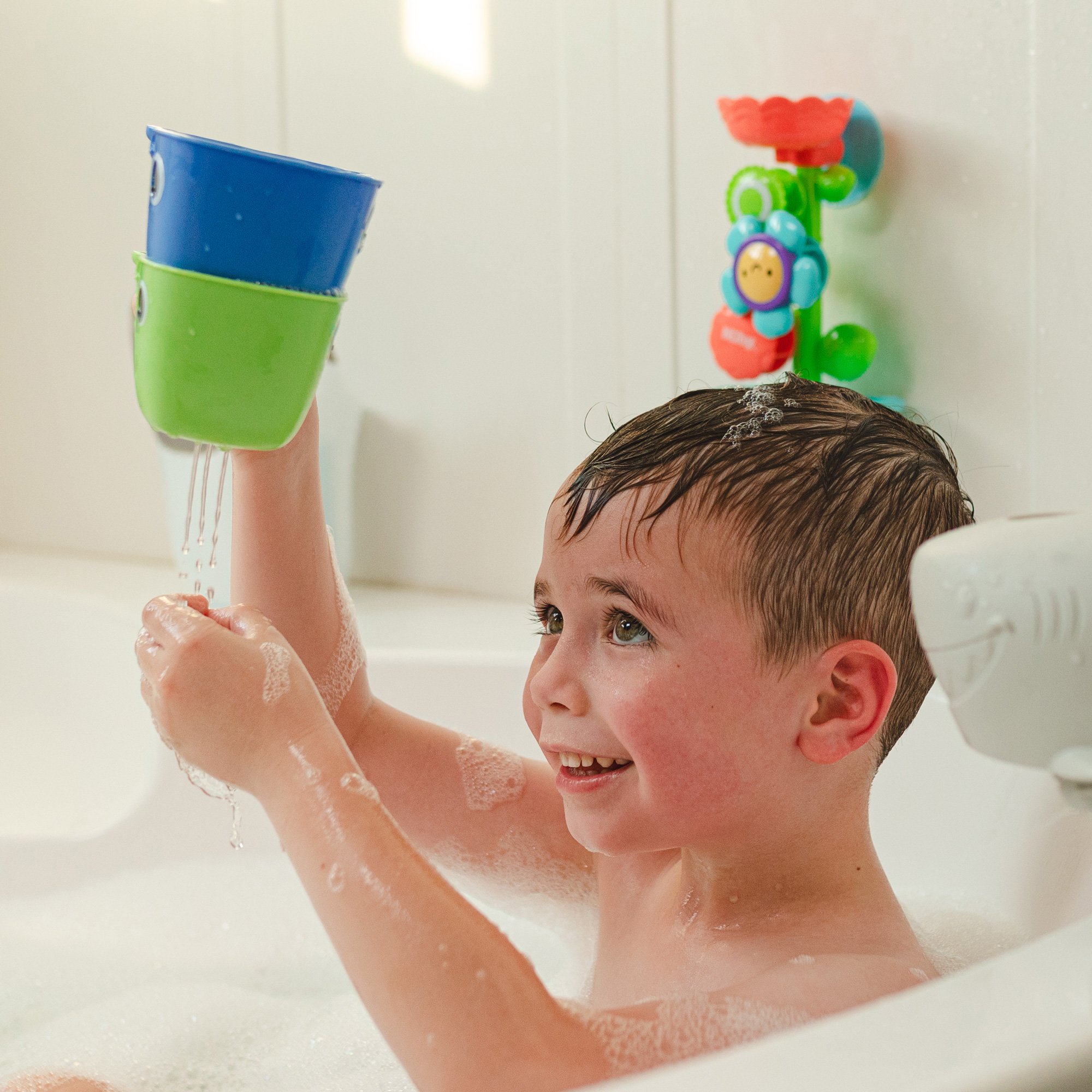
How to Clean Bath Toys While on the Go
Cleaning can be more difficult on vacation. Bring a small bottle of vinegar or gentle soap. Rinse toys in hotel sinks and dry them in the sun. If you can’t clean well, use only hard plastic toys that have no holes.
Dirty Bath Toys Health Risks
“Bath toys can be an invisible source of infection. A study in the journal Biofilms and Microbiomes found that mold in bath toys can cause respiratory problems. Babies with weak immune systems are more at risk. It’s better to clean toys regularly than deal with illness later.
FAQ’s
How To Know If Your Bath Toy Has Mold
Look for black spots or a moldy smell. If a toy has either, it probably has mold inside. Squeeze it out and see if it stinks or is cloudy.
Can I Use Bleach To Clean Bath Toys ?
Do not recommend. Bleach can leave a residue and is harsh on a baby’s skin. Instead, use mild soap or white vinegar.
Are Bath Toys Dishwasher Safe
Not Check the dishwasher safe label on the packaging. Only hard plastic toys without electronic parts are dishwasher safe.
How to Stop Mold Growing In Bath Toys?
Seal any holes with glue, dry toys after each bath and rotate toys regularly. Do not leave toys in water or in humid places.
Are Bath Toys Safe For Babies To Chew?
Toys are safe when they are cleaned regularly and replaced when damaged. Babies chew more, so cleanliness becomes even more important.
Cleaning baby bath toys is simple but vital. A few minutes each week protects your child from germs and sickness. With the right steps, you can keep bath time fun—and safe—for your little one. For more on safe cleaning, see CDC Bathing Hygiene Guide.