
When Can Babies Sleep with a Blanket? A Complete Guide to Safe Sleep Practices
Every new parent wants their baby to be sleeping safe, warm and comfortable. One of the most popular questions is: When can babies sleep with a blanket?’ The answer is nuanced , and it is based on the prevention of Sudden Infant Death Syndrome ( SIDS ) and other sleep related risks . Prominent health organisations such as the American Academy of Paediatrics ( AAP ) support this answer . This comprehensive 2500 word guide will take you through the science, standards, options and practical tips to help you navigate this important milestone.
Be aware of the risks: Why babies under two years should not use blankets
Newborns and small babies don’t move around so much and their neck muscles are weaker. During sleep, a loose blanket can slip over the baby’s face, nose or mouth easily. This can cause suffocation or rebreathing of exhaled carbon dioxide and has been linked to SIDS.
SIDS is the sudden, unexplained death of an apparently healthy infant less than one year of age. Data shows that deaths in sleep, such as suffocation and entrapment, peak between 1-4 months. Soft bedding is a prime culprit in these tragedies. The AAP strongly recommends no loose bedding, pillows, quilts or toys in the cot for the first 12 months.
Some key statistics underscore the importance:
- Soft objects in the sleeping environment are associated with an increased risk of sleep-related infant death.
- Bed-sharing and soft surfaces multiply the risks further.
- African American and American Indian/Alaska Native infants have higher rates of SIDS, so safe sleep education is critical in all communities.
Parents are always concerned about their baby getting cold, especially in winter. But overheating from too many layers or blankets also increases SIDS risk. The goal is a safe, bare sleep space with an appropriate room temperature (68-72°F or 20-22°C) and correct clothing.
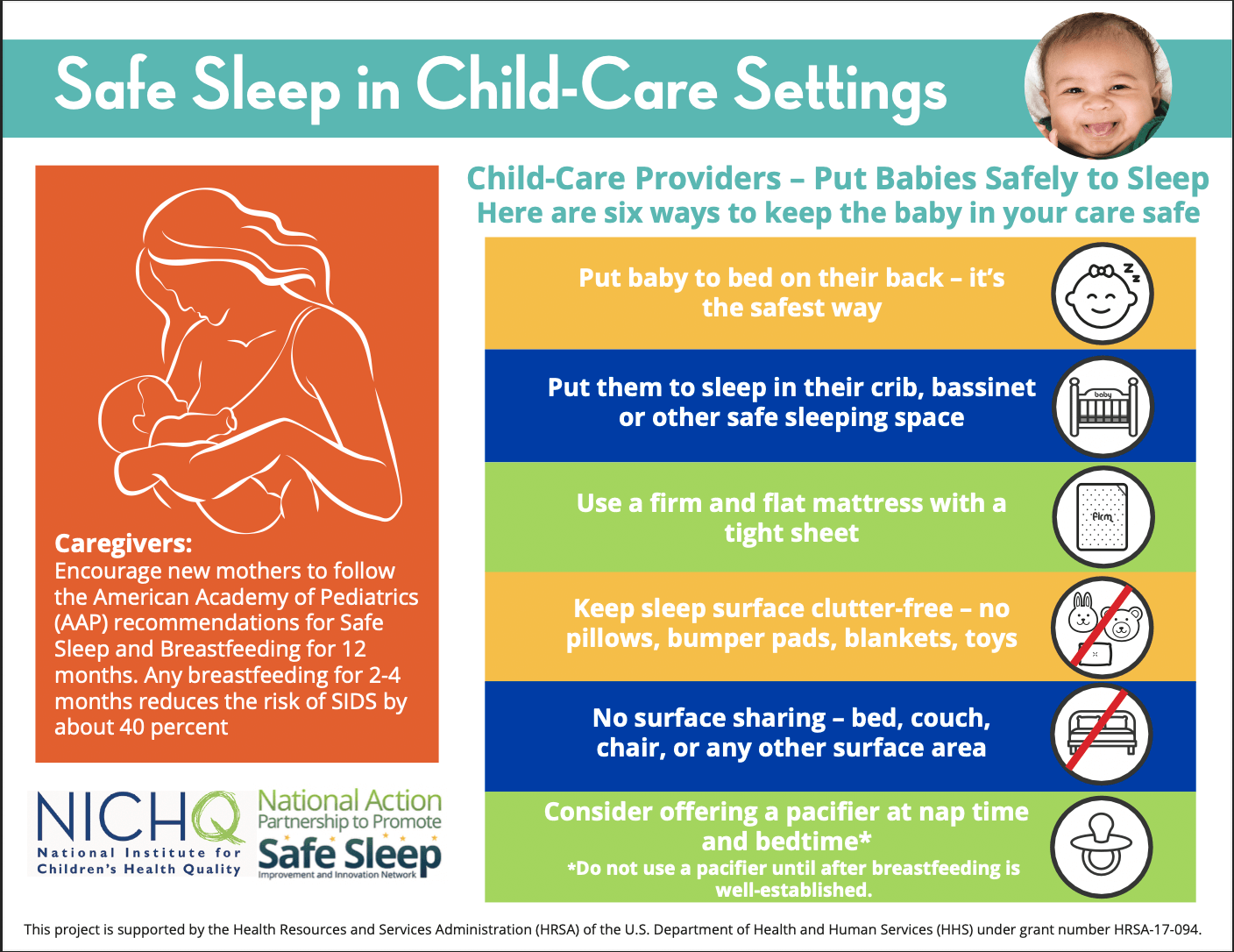
Core guidelines Back sleeping, firm mattress, no soft objects This infographic from safe sleep campaigns illustrates
AAP and CDC Official Recommendations
The AAP’s updated safe sleep policy in 2022 is clear and evidence-based:
- Always put babies on their backs for every sleep (naps and overnight) until they can roll themselves.
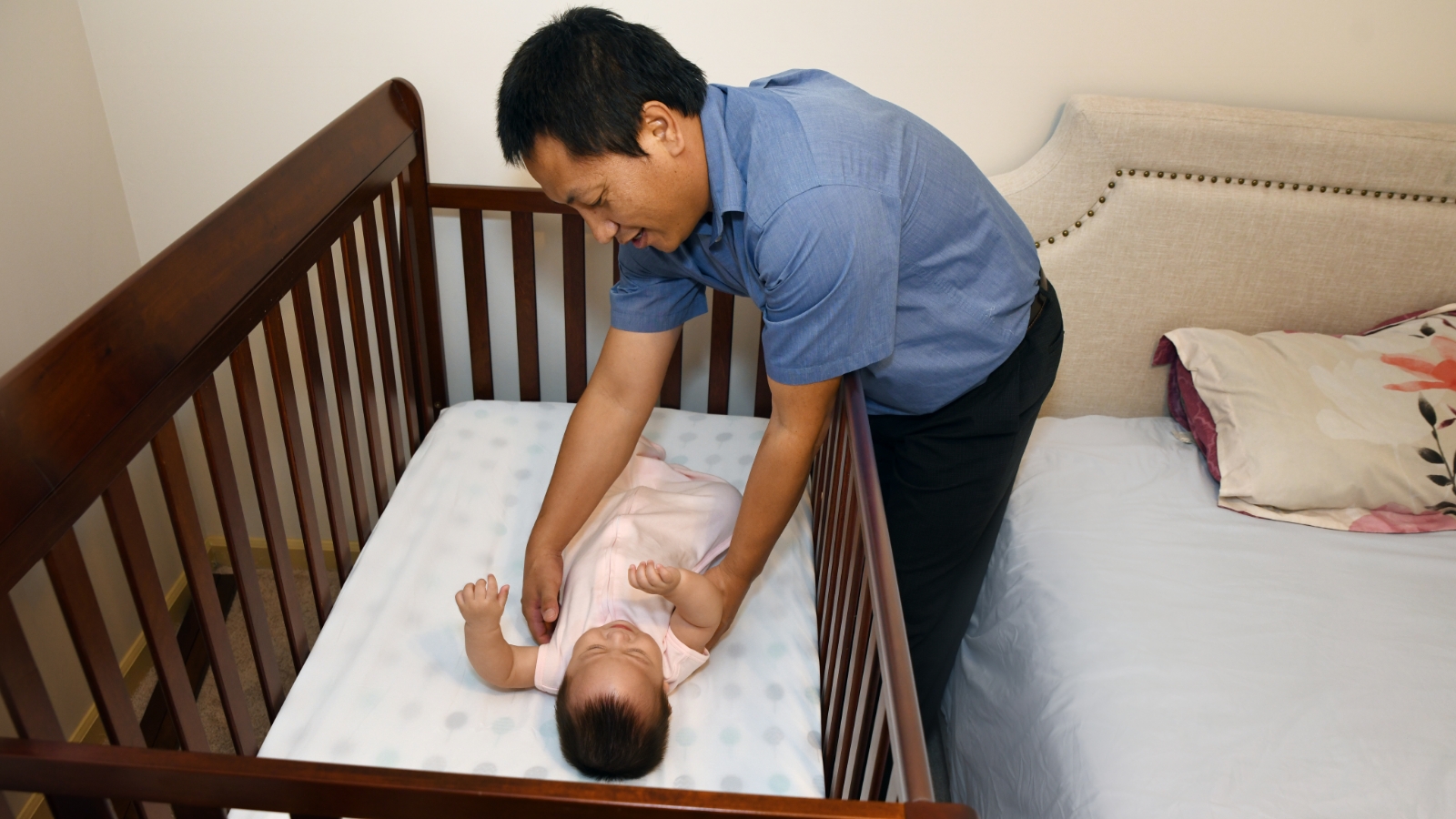
- Use a firm, flat sleep surface such as a crib, bassinet or play yard, with a fitted sheet. No soft beds.
- Room-share, no bed-sharing for minimum 6 months, preferably the whole first year
- Keep the cot bare: No blankets, pillows, bumpers or stuffed animals.
- Use light layers or wearable blankets/sleep sacks instead of loose coverings.
- Don’t get too hot: Wear light clothing, and watch for signs such as sweating or red cheeks.
The CDC agrees with these recommendations, stating that all soft bedding should be removed from the infant sleep area for the first year of life. Although risks tend to decrease after 12 months, many experts note that individual development varies, and some toddlers may still need monitoring.
These recommendations are based on decades of research since the 1990s when the “Back to Sleep” campaign dramatically reduced the rates of SIDS. But sleep-related deaths still occur due to unsafe practices.
When is it safe? The 12-Month Milestone:
Most paediatricians recommend waiting until 12 months to offer a blanket. At this age, babies usually have better motor control, are able to push away covers, and the risk of SIDS has peaked (and drops off rapidly after 6 months, and is uncommon after 12 months).
Signs your baby may be ready (at or after 12 months)
- Regularly rolling, sitting up and pulling up.
- No more just using a swaddle or sleep sack.
- Good temperature control, no history of breathing problems.
- Ability to move freely in the cot without risk of entrapment.
Even so, get a lightweight, breathable blanket that fits properly, not one that is oversized and can bunch up. Use the “feet to foot” technique some hospitals employ, securing it beneath the mattress at the foot of the cot, only reaching chest level.
Exceptions are rare for babies under 12 months. Premature or medically fragile infants may require longer restrictions, always check with your paediatrician.
Safety Alternatives to Regular Blankets
The good news is? You don’t need loose blankets to keep your baby warm. Here are the proven, AAP-approved options:

The gold standard is a wearable blanket or sleep sack. They are either sleeveless or long-sleeved sacks with leg openings that zip or snap shut securely. They give warmth without covering the head or face.
- Benefits: Reduces risk of suffocation, encourages safe back sleeping, often TOG rated to regulate temperature (e.g. 0.5-2.5 TOG for different seasons).
- Types: Muslin for breathability, Fleece for cold rooms, Bamboo for softness. Brands like Halo, Woolino, or generics are great.
- Transitioning: Swaddle for the newborns, then arms-out sleep sacks around 3-4 months when they start to roll.
Layered dressing:
- Onesies, footed pyjamas or light pyjamas.
- When it’s colder, put a sleep sack over lighter layers.
- Avoid hats indoors after the newborn period because they increase the risk of overheating.
Tips for the room environment:
- Use a ceiling fan to move air around.
- Blackout curtains and white noise machines to sleep better.
- Use a room thermometer/hygrometer to monitor.
Sleep sacks provide a sense of security for babies, so many parents report they sleep better as the startle reflex is less disruptive to sleep.

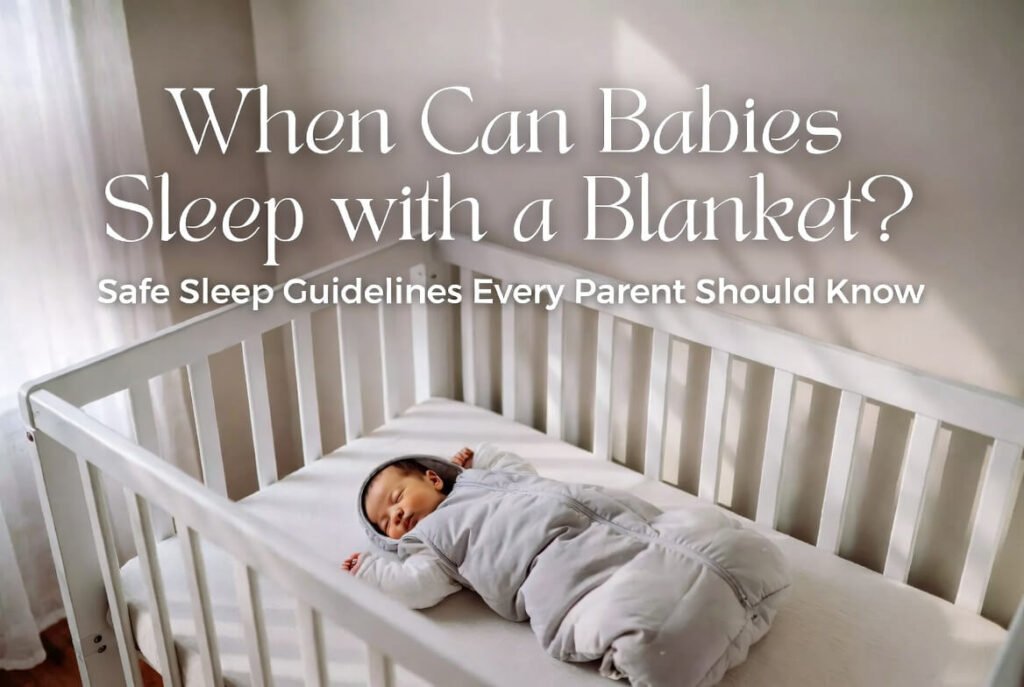
This shows a baby nestled in a sleep sack, secure and warm.
Selecting the Right Blanket When the time is right
12 months later, not all blankets are created equal:
- Material: cotton, muslin or lightweight fleece. Stay away from heavy quilts or anything with loose threads.
- Size: Toddler, not full bed-size
- Safety Features: No loose strings, buttons or decorations.
- Washing: Hypoallergenic, frequent washing to reduce allergens.
Slowly introduce during naps first to monitor. Always lay baby on back. If baby seems too warm, remove blanket.
What not to do:
- Using weighted blankets (not safe for infants as they can cause pressure).
- Loose tuck allowing movement.
- Too soon to match with pillows.
Developmental Considerations Across the Life Span
Age 0-3 months: Neat little bed. Swaddling works if done right (arms in, hips free), but stop if baby starts rolling.
4-6 months: Begin using sleep sacks when rolling begins. Increased vigilance in peak SIDS window
7-12 months: Crawling and pulling up give more mobility. Not loose stuff yet.
12+ months: Crib safety still an issue (no bumpers until much later, if ever); introduction of blanket possible
All babies grow in different ways. If your baby is rolling well at 10 months, they might be able to handle a small blanket earlier if you’re there to help, but the guidelines say wait until they’re a full year old, for the population’s safety.
Addressing Parental Concerns and Common Myths
Myth 1: “My baby needs a blanket or they will be cold.” Nope—just the right layers and sleeping bags. Over-bundling causes overheating, a SIDS risk factor
Myth 2: “Grandma used blankets and she was fine.” As more data become available, practices evolve. SIDS awareness and “Back to Sleep” reduced deaths by 50%+ .
Myth 3: Sleep sacks restrict movement. Modern designs prevent tangling but allow kicking and rolling.
Myth 4: “Blankets are great for self-soothing” Pacifiers (once breastfeeding is established), white noise, or loveys (after 12 months, with supervision) are better.
Parents in colder climates or draughty houses often become anxious. Solutions include better insulation, humidifiers or getting your HVAC checked out to make sure the room is a comfortable temperature instead of adding bedding.
Expert Insights and Real-Life Stories
Paediatricians often cite the AAP’s data, “The crib should be bare except for the baby and a fitted sheet.” Nurses in NICUs show sleep sacks every day.
One parent said, “We used sleep sacks until 14 months. “Our daughter transitioned to a lightweight blanket easily, and she sleeps better knowing she’s safe.”
Another: “We broke the rules one time and it was a really scary near miss with a moved blanket. “Nevermore.”
The National Institute of Child Health and Human Development (NICHD) supports room-sharing and bare cribs.
Safe Sleep Checklist: Tips & Tricks
- Each time back to sleep.
- Tight sheet, firm mattress.
- Sharing a room, not a bed.
- Proper layering or sleep sack.
- Not a thing soft.
- A quiet, dark, cool room.
- Routine well-child visits.
Travel: Same rules apply for portable cribs. Never leave your child sleeping in a car seat or pram unattended.
Baby Blankets and Sleep Q&A
Q: Can I use a thin muslin blanket on my 6 month old? A: No, generally not. Stay with sleep sacks until 12 months.
Q: What about stuffed animals or loveys? A: Just little ones without choking hazards and only when they are at least 12 months old.
Q: How can I tell if my baby is too warm? A: Touch chest or back, should be comfortable, not sweaty. Arms and hands may feel cool.
A. You can safely adapt many cultural or family traditions. A: Yes—try sleep sacks that mimic traditional wraps, or focus on warmth during non-sleep hours.
Q: When can you add pillows? A: Usually after 18-24 months when moving to a toddler bed.
Sleep Habits for the Long Term and Benefits of Safe Practices
Developing bare-crib habits early fosters healthy independent sleep. Babies learn to self-soothe without depending on covers. As they grow, introducing blankets teaches responsibility and comfort associations.
Safe sleep means less anxiety for parents too – if you know your baby is in the lowest risk environment you can sleep easier.
Studies show that consistent safe sleep is associated with better overall development and fewer hospital visits for respiratory problems.
Conclusion: Safety Comes First for Peaceful Nights
You’ll wait about 12 months for a blanket to ensure your baby is safe during the most vulnerable stage. Sleep sacks and layers are your friend. They work, they’re easy, and they’re recommended. Always check with your paediatrician for advice regarding your particular child, especially with preemies or health issues.
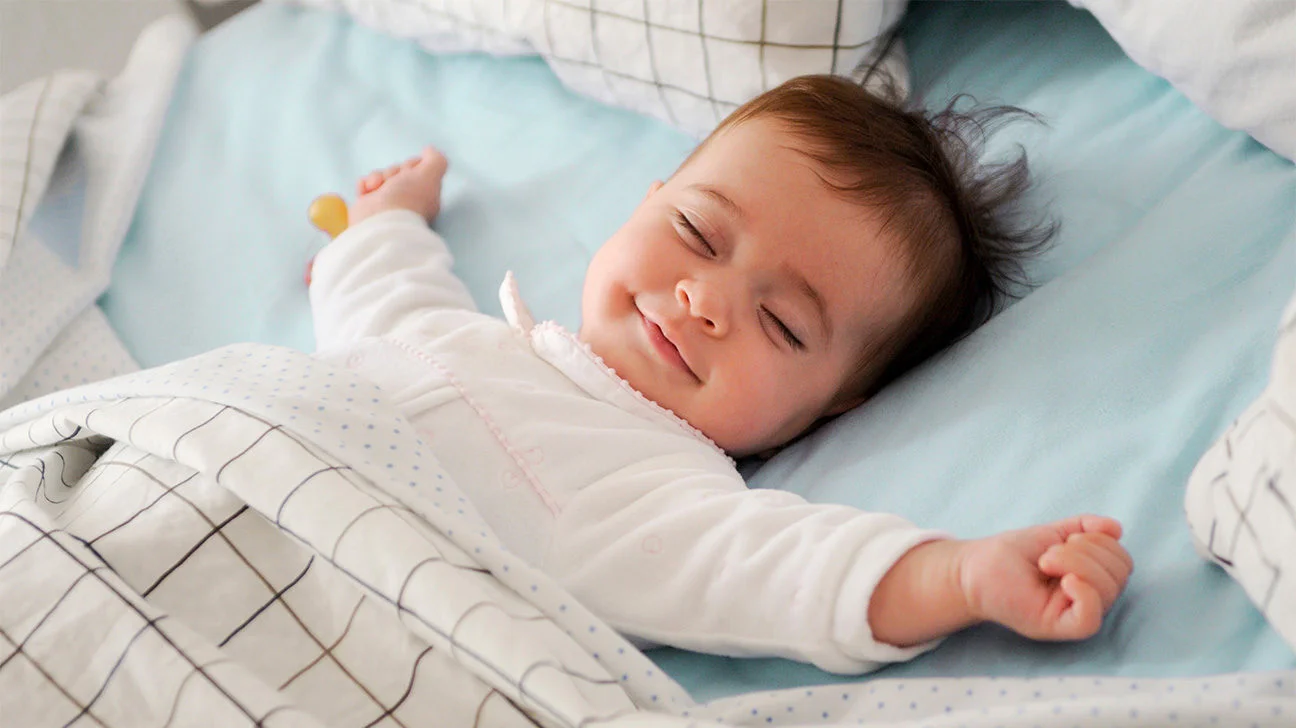
Following these guidelines provides your child with the best start – safe, warm, restful sleep that supports growth and family well-being.
Remember: Safe sleep saves lives. Share this knowledge with carers, family and friends. Visit AAP.org or HealthyChildren.org for more resources.
Pingback: How to Dress Baby for Sleep | Safe AAP Guidelines-2026
Pingback: When Can Baby Sleep With Blanket Safely? Expert Tips 2024
Pingback: Why Do Babies Smile in Their Sleep? Discover the 5 Reasons
Pingback: 3 Best Strollers for Plane Travel: Top Picks & Reviews