
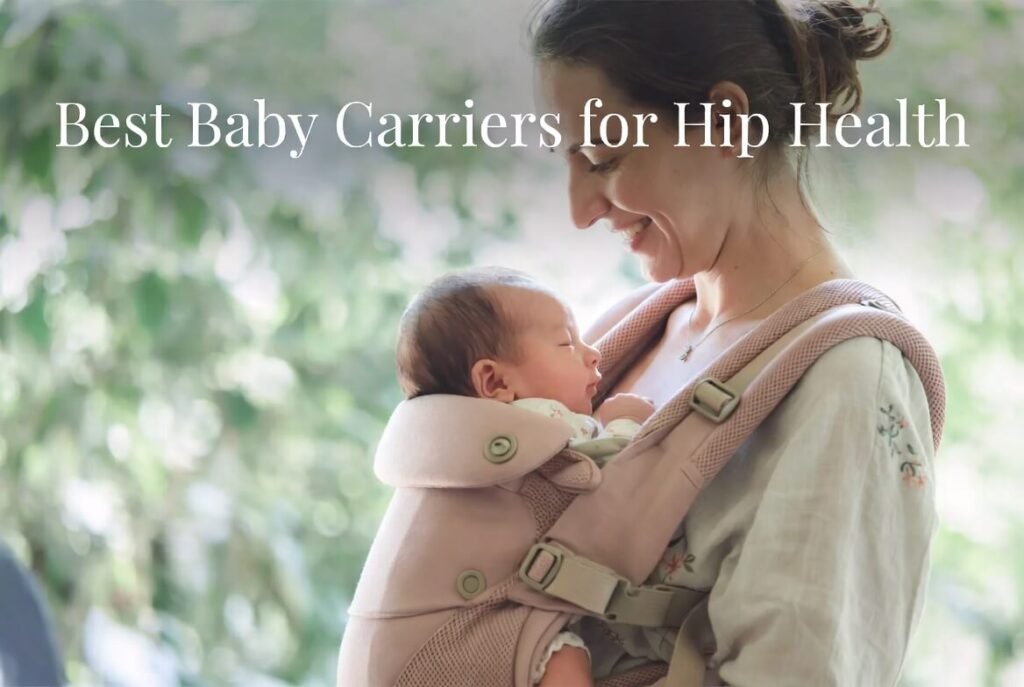
The Ultimate Guide to the Best Baby Carriers for Hip Health: Protecting Your Baby’s Development While Staying Close

Babywearing is one of the most beautiful and functional ways to bond with your little one. There are not only emotional benefits, but the right carrier can also help support your baby’s hip and spine development. Many infants suffer from hip dysplasia and related problems, so it’s important to prioritise carriers that promote the correct “M-position” or spread-squat posture.
In this 2600 word guide, you will learn everything you need to know about baby carriers that are hip-friendly. We’ll explore the science, what to watch for, our top picks, expert advice, real parent reviews, and practical tips. Whether you’re expecting your first child or adding a new member to your family, this post will help you make an informed decision that promotes healthy growth.
Baby Hip Development: Why It’s Important & What To Know
Newborns have very loose hips naturally, and with the right movement and positioning, the shallow sockets deepen in the first few months. Developmental dysplasia of the hip (DDH) is a condition in which the ball and socket don’t fit together properly. This can range from mild instability to frank dislocation. It affects about 1-2% of babies, with some populations at higher risk (eg breech births, family history, or swaddling).
According to the International Hip Dysplasia Institute (IHDI), a baby who is worn correctly can help to promote healthy hip development. The preferred position is the M-position (also called the spread-squat or jockey position): thighs spread around the torso of the carer, hips flexed, knees slightly higher than buttocks, with full thigh support to the knees. This position mimics the natural foetal or clinging position and promotes optimum socket deepening without restriction of movement.
Tight or straight-leg positions held for extended periods (like some narrow-based carriers or swaddles that are too restrictive) can increase risk, especially in the first 6 months when the hips are most vulnerable. On the flip side, carriers that allow free leg movement and provide support are hip-healthy.
Important Carrying Guidelines for IHDI Hip-Healthy
- Supported thighs to the knee.
- Knees above the bottom.
- Hips Flexed, Abducted (Spread Apart)
- Best facing inwards for newborns and small infants.
- Avoid too-narrow seats that force legs together or straight down.
Modern ergonomic carriers are based on these principles and are often recognised by the IHDI (note: the IHDI recognises the alignment of products with their mission but does not formally “certify” all products).
What Makes a Baby Carrier “Hip-Healthy”?
Not all carriers are the same. Search for these features:
- Wide, supportive seat base Supports thighs from knee to knee, eliminating dangling or compression
- Adjustable Width & Height: Customisable for M-position at each stage; grows with your baby.
- Soft, Flexible Materials Critical for wraps and slings that mould to the baby’s body
- Multiple Carry Positions: Front inward, back, and hip. Special emphasis on inward hip support during early months.
- Ergonomic Panel and Straps: Distributes weight evenly so the parent stays comfortable for long wear times.
- Breathable Mesh Options: For warm weather without sacrificing support.
Steer clear of carriers with narrow, hammock-style seats or that force your legs to stay straight—particularly for long periods of time.
Best Baby Carriers for Hip Health – Our Top Picks
These are the top picks based on the experts’ recommendations, parents’ reviews and the principles of IHDI. These are popular ergonomic soft-structured carriers (SSCs), wraps and hybrids praised in reviews in 2025-2026.
1. Ergobaby Omni Series (Omni 360, Omni Breeze, Omni Deluxe)
Ergobaby is a pioneer in hip-healthy designs. The Omni line is great for newborns (with or without inserts) all the way up to toddlers (7-45 lbs). Features include a wide adjustable seat that promotes the M-position, all-position carrying (front in/out, back, and hip) and excellent lumbar support. The Breeze model has mesh for breathability.
Parents love the padded straps and the easy adjustability. Many say they use it daily for hikes or errands and don’t have back pain. Its IHDI-compatible positioning makes it a great choice for hip-conscious families. Price: $160 to $200.

2. BabyBjörn One & Harmony
All BabyBjörn carriers are now considered hip-healthy by IHDI. The supportive seat makes it easy to move your legs and adjust. The One model is suitable from newborn to toddler and has a soft, padded design that keeps the hips in a natural spread.
The newer models fix the initial concerns of the older narrow designs. They’re easy to wear and great for short wear or travel. Perfect for parents wanting simplicity and proven safety.
3. Tula Explore and Free-to-Grow
Tula carriers are loved for their stylish fabrics and ergonomic excellence. The Explore has a wide seat panel, multiple positions, and grows with the baby. Great thigh support and adjustability for hip health. A lot of parents praise comfort for both the baby and the wearer over long periods.
4. Complete 6-in-1 All Seasons Líllébaby
Wirecutter’s top pick for versatility – six positions including newborn with insert. Wide base design promotes healthy hip positioning and provides support. Airy choices. Excellent for growing families.
5. Soft Wraps & Slings: Solly Baby, Boba Wrap, Oscha, Wildbird Wraps
Woven wraps and ring slings are great for hip health if tied correctly. They offer customisable M-positioning and close contact. Some popular brands that get recommended a lot are Solly (stretchy for newborns) and Oscha (woven for durability). Proper tying is key; ask a babywearing educator.
6. Other Notables: Momcozy WeeSnug (newborn, IHDI-recognised); Wildbird Aerial (hybrid comfort); hip-seat carriers like Tushbaby, for older babies (short-term use, good support).
In-depth comparison: Carriers compared
Choose with your lifestyle in mind:
- Newborn Stage (0-6 months): Choose carriers with newborn inserts or soft wraps like the Ergobaby Embrace or Boba Wrap. Best is inside facing.
- Active Toddlers: Ergobaby Omni or Tula for back carries and durability
- Hot Climates: Mesh options such as Omni Breeze or Líllébaby All Seasons.
- Budget: Go for versatile models that last longer rather than multiple carriers.
Real user feedback includes comfort during long wear, ease of breastfeeding in the carrier, and peace of mind knowing hips are supported. “Going from a narrow carrier to an Ergobaby was a huge change – my baby’s legs were spread naturally, and she slept better,” said one parent.
The Science of Babywearing and Hip Health
Research suggests inward-facing soft-structured carriers mimicking the benefits of the Pavlik harness (used in DDH treatment) without restricting muscle activity. Research on positions has shown that baby slings provide hip angles similar to those of therapeutic devices and encourage natural movement.
Sitting in a car seat for long periods of time (legs extended and body reclined) can be worse than good carrying. Babywearing is good for bonding; it decreases crying and it assists with pelvic development through active positioning.
Risk Factors and Prevention:
- Family history or breach: Early ultrasound screening.
- Swaddling: Hip-safe swaddling or allowing the hips to move.
- Carriers: Seek out thigh support; spend time in non-ergonomic ones.
How to Safely Use Your Carrier for Best Hip Health
- Check the “T.I.C.K.S” Tight In view Close enough to kiss Keep chin off chest Supported back
- Position Baby: Bottom supported below knees, thighs supported.
- Adapt to Baby’s Growth: For older infants, expand the seat.
- Alternate Positions: Combine front, back and hip carries.
- Monitor comfort: Baby legs should move freely, but the baby should not slide down.
- Get Help: Contact local babywearing groups or certified educators.
Start small and build from there. Follow weight/age guidelines from the manufacturer.
More Benefits
Healthy hip carriers also promote:
- Development of spinal curvatures (C-curve in newborn).
- Movement. Building strength in the core muscles.
- improved digestion, reduced reflux, stay upright
- Parental mental health: Hands-free bonding reduces isolation.
- Proximity helps regulation. Sensory development.
Deeper sleep, easier outings, and stronger attachment are reported by many parents.
Popular Myths and Misconceptions
Myth: All breeds will develop hip dysplasia. In reality, only long-term improper positioning can be dangerous. Most modern ergonomic ones are safe to use.
Myth: It’s always bad to be forward-facing. Reality: Fine for short periods with hip support, but with head/neck control (around 5-6 months). Inside is preferred early.
Myth: More expensive = better The Reality: Many mid-range options are great if they are ergonomic.
Tips and Things to Consider When Buying
- Test before you buy: Try it in store or use return policies.
- Material & Care: Machine-washable, durable fabrics.
- Sizing: Most are one-size-fits-most with adjustability.
- Accessories: Newborn inserts, hoods, storage pockets.
- Sustainability: Choose quality brands that source ethically.
- Where to Buy: Amazon, brand sites or baby stores for demos
Think about body type. If your parents are tall, they may want longer straps. There are plus-size options.
Long-Term Perspective: From Baby to Toddler
Hip development continues into walking age . Support stays strong with back transition ~6+ months. Carriers are good for about 3-4 years (up to 45 lbs) and provide value and consistency.
Hip seats are made to provide short-term relief for heavy kids and are ergonomic for toddlers.
Expert Voices & Resources
- IHDI website: Tips & acknowledgements for in-depth products.
- Paediatric orthopaedists: Suggest knowledge of the M-position.
- Babywearing International: Education, support.
- Lactation consultants are often expert wearers.
“Consult your paediatrician for personalised advice, especially if you have risk factors.”
Conclusion: Select Connection and Health
Choosing a hip-healthy baby carrier is an investment in your child’s physical foundation and your journey together. Ergobaby, BabyBjörn, Tula and Líllébaby are leading the way with well-thought-out, evidence-based designs that focus on the M-position and ergonomics as a whole.
Knowing the “why” behind hip-healthy carrying allows you to confidently wear your baby and continue promoting closeness while supporting natural development. Remember: The best carrier is one that fits your family’s needs, is comfortable for long periods of time and keeps those teeny legs in a happy frog-like spread.
Enjoy every snuggle, trust the science and enjoy the closeness. Your baby’s hips—and your heart— will thank you.
Pingback: Best Baby Spoons for Self Feeding in 2026 | Top 7 Picks
Pingback: When Can Baby Sleep With Blanket Safely? Expert Tips 2026