
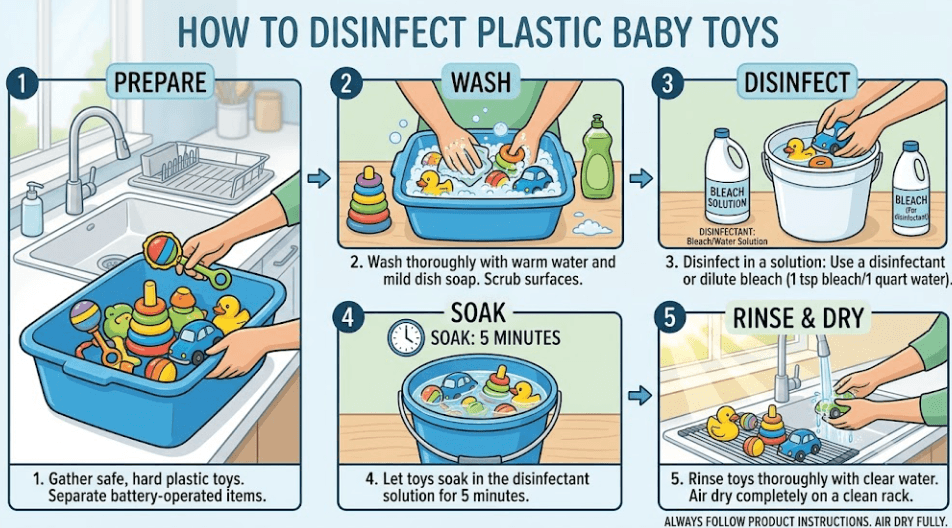
Keeping your baby’s toys clean is more than just a chore—it’s a way to protect their health. Babies put toys in their mouths, drop them on the floor, and share them with others. Germs can easily travel from toys to your baby’s hands, face, or mouth. Research shows that some viruses and bacteria can survive on toys for hours or even days. So, knowing how to disinfect baby toys properly is essential for every parent or caregiver.
Why Disinfect Baby Toys?
Regular cleaning removes dirt, but disinfecting goes a step further. It kills germs that cause illnesses like colds, stomach bugs, and even more serious infections. According to the CDC, shared surfaces—including toys—are a common way for children to catch viruses.
Babies have weaker immune systems, so even mild germs can make them sick. Disinfecting toys is a simple, effective way to reduce this risk.
Choosing The Right Disinfectant
Not all cleaning products are safe for babies. Some contain harsh chemicals that can linger on toys and harm your child. It’s best to use baby-safe disinfectants like diluted bleach solutions, hydrogen peroxide, or products labeled non-toxic for children. Always check labels and follow instructions.
Here’s a quick comparison of common disinfectants:
| Disinfectant | Safe for Babies | Effective Against Germs | Cost |
|---|---|---|---|
| Bleach Solution | Yes, when diluted | Very high | Low |
| Hydrogen Peroxide | Yes | High | Medium |
| Alcohol Wipes | No (too harsh) | High | Medium |
| Soap & Water | Yes | Moderate | Low |
| Commercial Baby-Safe Sprays | Yes | High | High |

Step-by-step Guide To Disinfecting Baby Toys
Different toys need different cleaning methods. Before you start, sort toys into categories: plastic, soft, wooden, and electronic. Here’s how to disinfect each type safely.
Plastic Toys
Most plastic toys are durable and easy to clean.
- Wash with warm, soapy water.
- Rinse and dry.
- Prepare a diluted bleach solution (1 tablespoon bleach per gallon of water).
- Soak toys for 5 minutes or spray with solution.
- Rinse well and air dry.
Plastic toys can also go in the dishwasher if they don’t have batteries or stickers.
Soft Toys
Stuffed animals and fabric toys need gentle care.
- Check care labels for machine wash instructions.
- Use hot water and mild detergent in the washing machine.
- Dry on high heat if possible—heat kills germs.
- For non-washable items, use a steam cleaner or disinfectant spray.
Wooden Toys
Wood can absorb water, so avoid soaking.
- Wipe with a damp cloth and mild soap.
- Spray with hydrogen peroxide or a baby-safe disinfectant.
- Let air dry completely before use.
Electronic Toys
Electronics can’t be submerged.
- Turn off and remove batteries.
- Wipe surfaces with a cloth dampened in disinfectant (not soaked).
- Dry thoroughly.
- Replace batteries only when fully dry.
How Often Should You Disinfect?
The frequency depends on use. Toys that babies chew or share should be disinfected daily. Others, like blocks or puzzle pieces, can be cleaned weekly. If your child is sick, disinfect toys immediately after illness. Daycare centers often clean toys daily because germs spread quickly in groups.
Here’s a comparison of cleaning frequency for different toys:
| Toy Type | Recommended Cleaning | Disinfection Frequency |
|---|---|---|
| Teething Toys | Wash after every use | Daily |
| Shared Toys | Clean after sharing | Daily |
| Soft Toys | Wash with laundry | Weekly |
| Wooden Toys | Wipe with disinfectant | Weekly |
| Electronic Toys | Wipe surfaces | Weekly |
Practical Tips And Common Mistakes
- Always rinse toys after using disinfectant, especially bleach. This removes any residue that could harm your child.
- Let toys air dry completely. Moist surfaces can grow germs.
- Don’t use antibacterial wipes meant for adults. These often contain alcohol or chemicals that aren’t safe for babies.
- Avoid soaking wooden toys or electronics. This can damage them and make them unsafe.
- Label storage bins for “clean” and “dirty” toys. This makes it easier to keep track and avoid cross-contamination.
Many parents forget to disinfect bath toys, which can collect mold inside. Squeeze out water, soak in bleach solution, rinse, and let them dry.
When To Replace Toys
Some toys are too worn or damaged to clean properly. If a toy is cracked, stained, or has mold you can’t remove, it’s time to throw it away. Broken toys can also pose choking hazards. When buying new toys, choose ones that are easy to clean and disinfect.

Safe Storage After Disinfecting
Storing clean toys is as important as cleaning them. Keep toys in a dry, closed container or on shelves, away from pets or dirty surfaces. Avoid mixing cleaned toys with unwashed ones. This keeps your efforts from going to waste.
Frequently Asked Questions
How Can I Disinfect Toys Without Using Chemicals?
You can use hot water, steam cleaners, or wash soft toys in the machine on high heat. Hydrogen peroxide is another safe option.
Are Homemade Disinfectants Safe For Baby Toys?
Some homemade solutions, like diluted vinegar, clean but don’t kill all germs. Always use proven disinfectants recommended by health experts for best results.
What’s The Best Way To Disinfect Bath Toys?
Soak bath toys in a bleach solution for 5 minutes, rinse, and air dry. Squeeze out all water to prevent mold growth.
Can I Use Antibacterial Wipes For Baby Toys?
No. Most wipes are too harsh and may leave dangerous residues. Choose wipes labeled safe for children or use soap and water.
How Do I Know If A Toy Is Clean Enough?
Visually inspect for dirt, stains, or smells. After disinfecting, rinse and dry. If you’re unsure, err on the side of caution and clean again.
Keeping your child’s toys clean doesn’t have to be complicated. With the right methods, you can protect your baby from germs and enjoy peace of mind. For more information on safe disinfecting, visit the CDC’s Healthy Childcare page. Clean toys mean healthier, happier children—so make disinfecting part of your routine.
